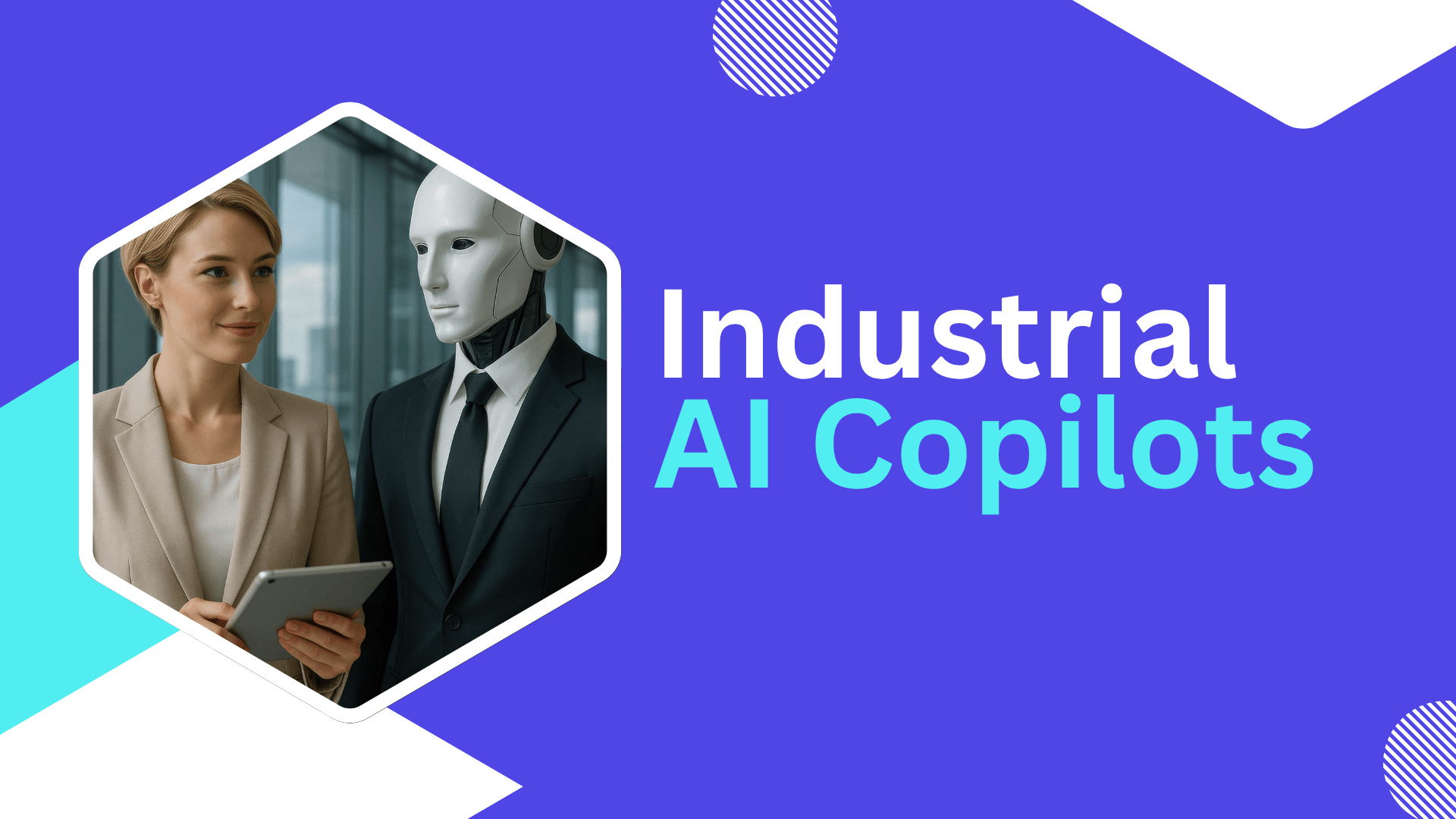
Industrial AI Copilots: Empowering Blue-Collar Workers
John Doe•
Industrial AI Copilots: Empowering Blue-Collar Workers
In today’s rapidly evolving industrial landscape, the integration of artificial intelligence (AI) is no longer confined to corporate offices or data centers. AI has made its way to the factory floor, maintenance bays, and field operations, revolutionizing how blue-collar workers perform their jobs. Among the most transformative applications are AI copilots—intelligent assistants that work alongside maintenance technicians, machine operators, and field service personnel to enhance their capabilities and efficiency.
The Rise of AI Copilots in Industrial Settings
AI copilots represent a paradigm shift in how we approach industrial work. Unlike automation systems that replace human workers, copilots are designed to augment human capabilities, providing real-time guidance, troubleshooting support, and access to vast knowledge bases while leaving critical decision-making in human hands.
Key Features of Industrial AI Copilots
Real-time Guidance and Troubleshooting
Step-by-step instructions for complex maintenance procedures
Visual recognition of equipment components and issues
Predictive diagnostics based on equipment symptoms and history
Knowledge Access and Transfer
Instant access to equipment manuals, schematics, and repair histories
Contextual information delivery based on the specific task at hand
Preservation and sharing of expert knowledge across the workforce
Hands-free Operation
Voice-activated assistance for workers who need both hands free
Augmented reality overlays through smart glasses or tablets
Natural language processing for intuitive human-machine interaction
How AI Copilots Transform Blue-Collar Work
Bridging the Skills Gap
One of the most significant challenges facing industrial sectors is the growing skills gap as experienced workers retire and fewer young people enter technical trades. AI copilots help address this challenge by:
Enabling less experienced workers to perform complex tasks with expert guidance
Accelerating the learning curve for new technicians
Providing on-the-job training through guided work experiences
Enhancing Efficiency and Accuracy
AI copilots significantly improve the productivity and precision of maintenance operations:
Reducing diagnostic time by 40-60% through AI-assisted troubleshooting
Decreasing errors in maintenance procedures by providing precise instructions
Minimizing unnecessary parts replacements through accurate diagnostics
Improving Safety and Compliance
Worker safety is paramount in industrial environments, and AI copilots contribute to safer operations by:
Alerting workers to potential hazards before beginning procedures
Ensuring compliance with safety protocols and regulations
Providing guidance for handling dangerous materials or situations
Real-World Applications Across Industries
Manufacturing Maintenance
In manufacturing facilities, AI copilots assist maintenance technicians with:
Predictive maintenance alerts based on equipment performance data
Guided repair procedures for complex machinery
Parts inventory management and ordering suggestions
Field Service Operations
For technicians working in the field, AI copilots provide:
Remote expert assistance when facing unfamiliar problems
Access to customer equipment histories and previous service records
Navigation and logistics support to optimize service routes
Real-time guidance for emergency repairs during outages
Compliance assistance for regulated procedures
Documentation support for inspection and maintenance activities
Case Study: AI Copilots in Action
A major manufacturing company implemented AI copilot technology for its maintenance team and achieved remarkable results:
35% reduction in mean time to repair (MTTR)
28% decrease in unplanned downtime
42% improvement in first-time fix rates
22% reduction in training time for new technicians
The system combined augmented reality glasses with AI-powered guidance, allowing technicians to see step-by-step instructions overlaid directly on the equipment they were servicing. The AI assistant could recognize components, diagnose common issues, and even connect technicians with remote experts when needed.
Implementing AI Copilots: Best Practices
Organizations looking to deploy AI copilots should consider these key factors:
1. Focus on Augmentation, Not Replacement
The most successful implementations position AI copilots as tools that enhance worker capabilities rather than replace them. This approach not only yields better results but also improves worker acceptance.
2. Involve Workers in the Development Process
Frontline workers should participate in the design and implementation of AI copilot systems. Their practical knowledge is invaluable for creating truly useful assistants.
3. Start with High-Value Use Cases
Begin with specific maintenance procedures that:
Are performed frequently
Have high complexity
Impact critical equipment
Currently require extensive training
4. Ensure Seamless Integration
AI copilots should integrate with existing systems, including:
While the benefits are substantial, organizations implementing AI copilots should be aware of potential challenges:
Technical Infrastructure Requirements
Reliable connectivity in industrial environments
Robust data management systems
Integration with legacy equipment and systems
Worker Adoption and Training
Overcoming initial resistance to new technology
Developing appropriate training for different skill levels
Creating a culture that embraces technological assistance
Data Security and Privacy
Protecting proprietary maintenance procedures and equipment data
Ensuring secure connections for remote assistance
Complying with industry regulations regarding data handling
The Future of AI Copilots and Blue-Collar Work
As AI technology continues to advance, we can expect industrial copilots to become even more sophisticated and integral to blue-collar work:
Emerging Capabilities
Adaptive Learning: Copilots that learn from individual technicians’ preferences and methods
Collaborative Problem-Solving: AI systems that can work with multiple technicians simultaneously on complex issues
Predictive Assistance: Anticipating worker needs based on context and historical patterns
Expanding Applications
Integration with autonomous mobile robots for parts delivery and tool retrieval
Extended reality (XR) environments for immersive training and remote collaboration
Biometric monitoring to ensure worker safety and prevent fatigue-related errors
Conclusion
Industrial AI copilots represent a transformative approach to empowering blue-collar workers in an increasingly complex technological landscape. By augmenting human capabilities rather than replacing them, these systems address critical challenges like the skills gap while improving efficiency, safety, and job satisfaction.
Organizations that successfully implement AI copilot technology gain a significant competitive advantage through enhanced maintenance operations, reduced downtime, and more effective knowledge transfer. As these technologies continue to evolve, they will play an increasingly vital role in shaping the future of industrial work—creating an environment where humans and AI collaborate to achieve results neither could accomplish alone.
The future of industrial maintenance isn’t about choosing between human workers or AI—it’s about creating powerful partnerships that leverage the unique strengths of both.